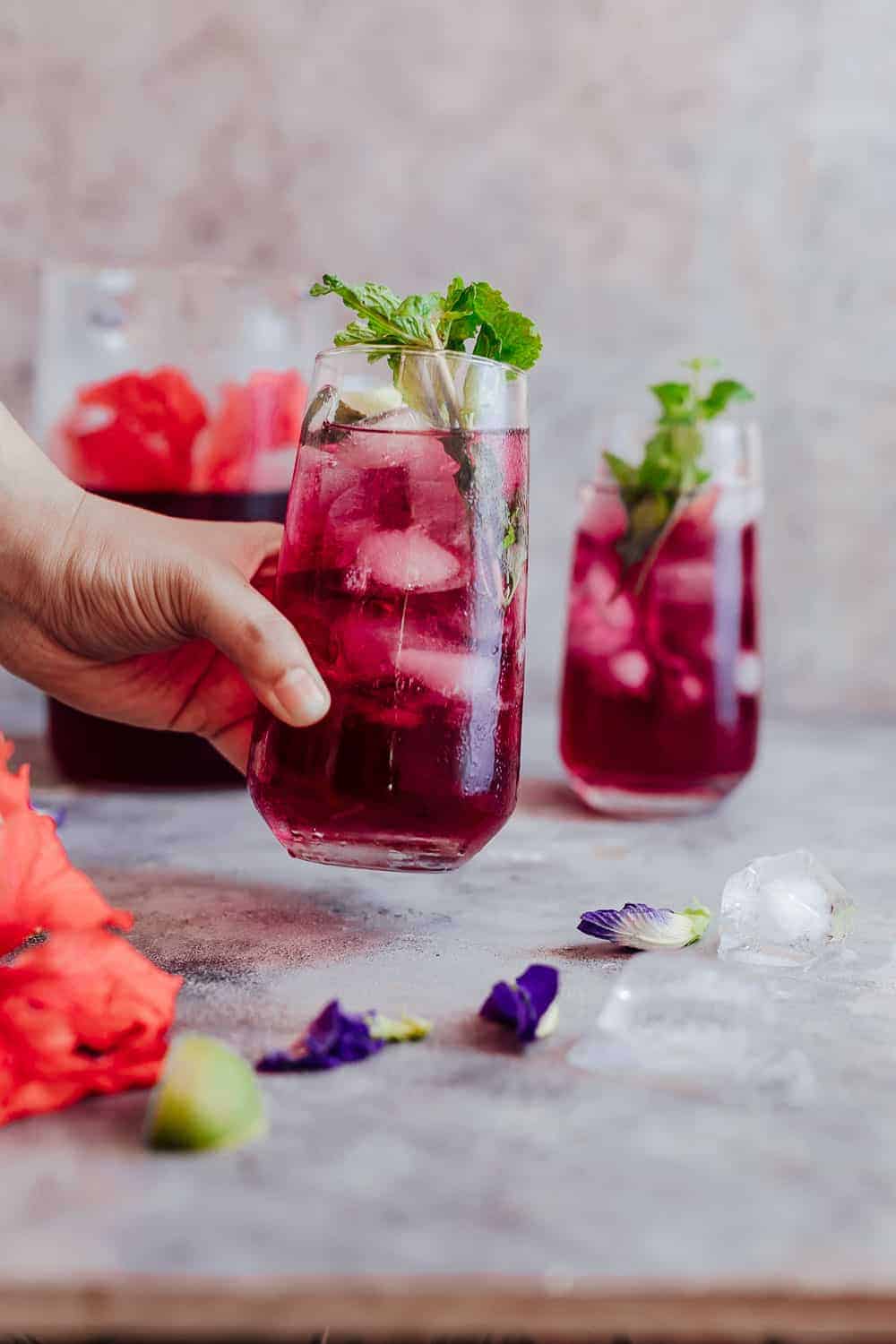
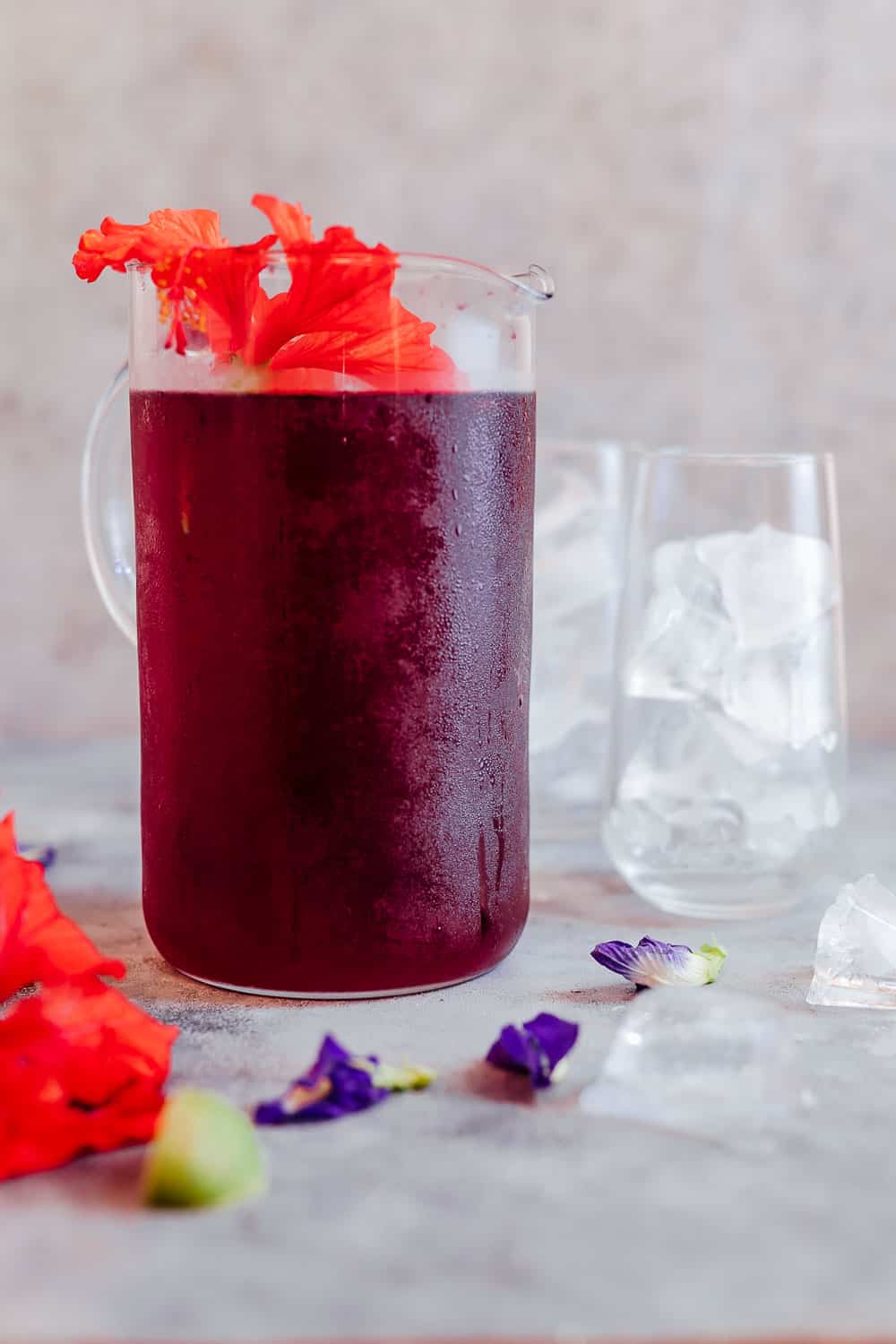
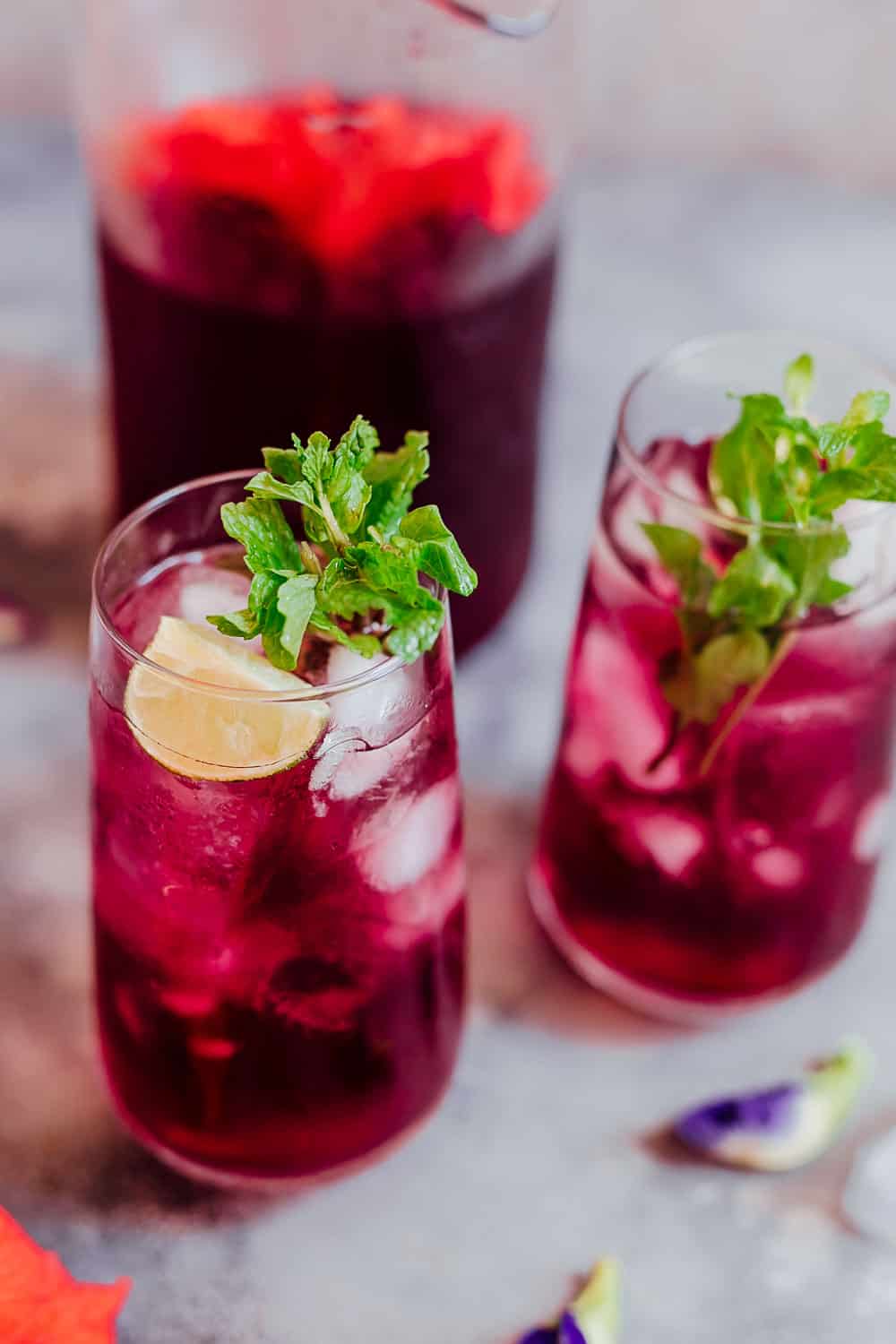
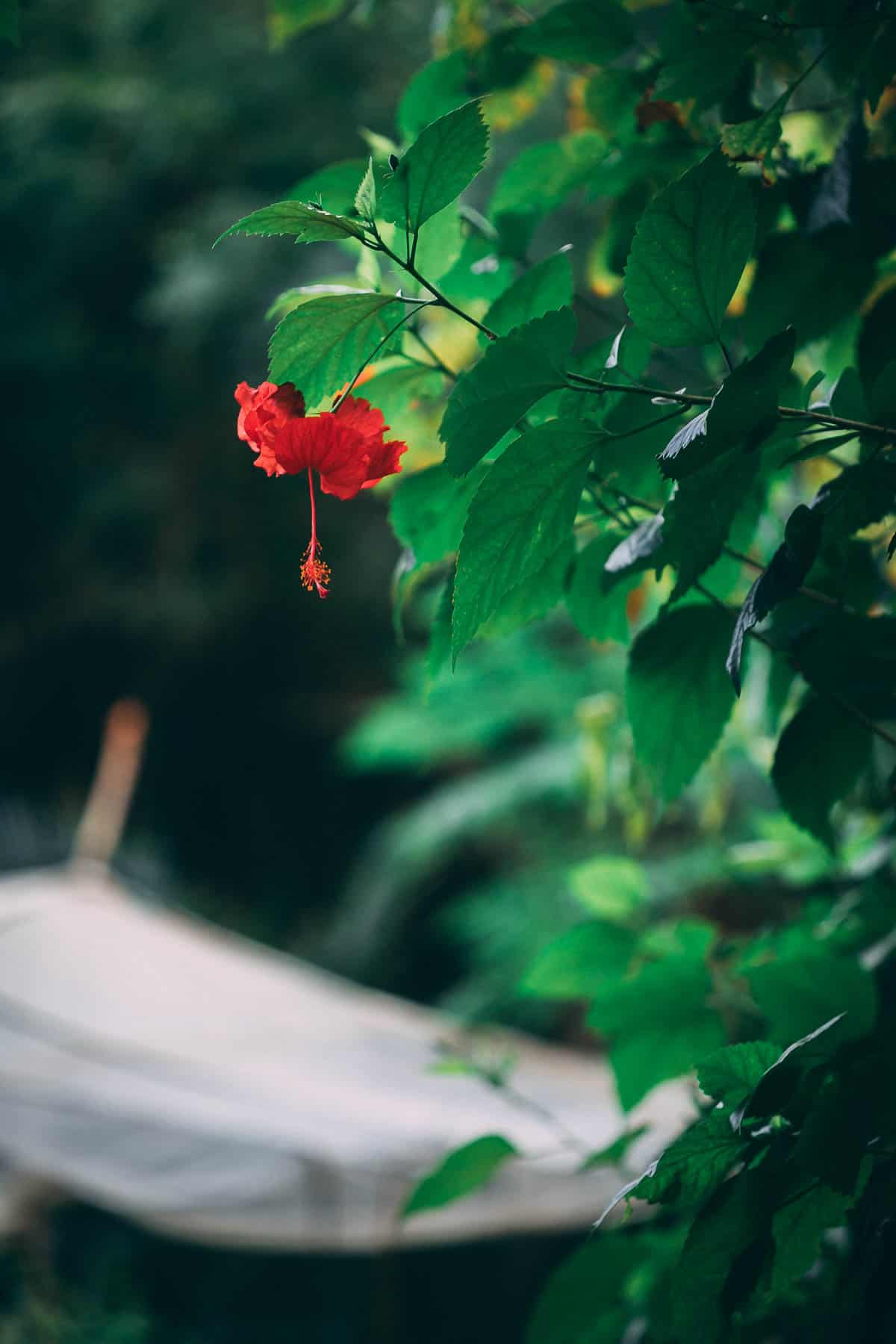
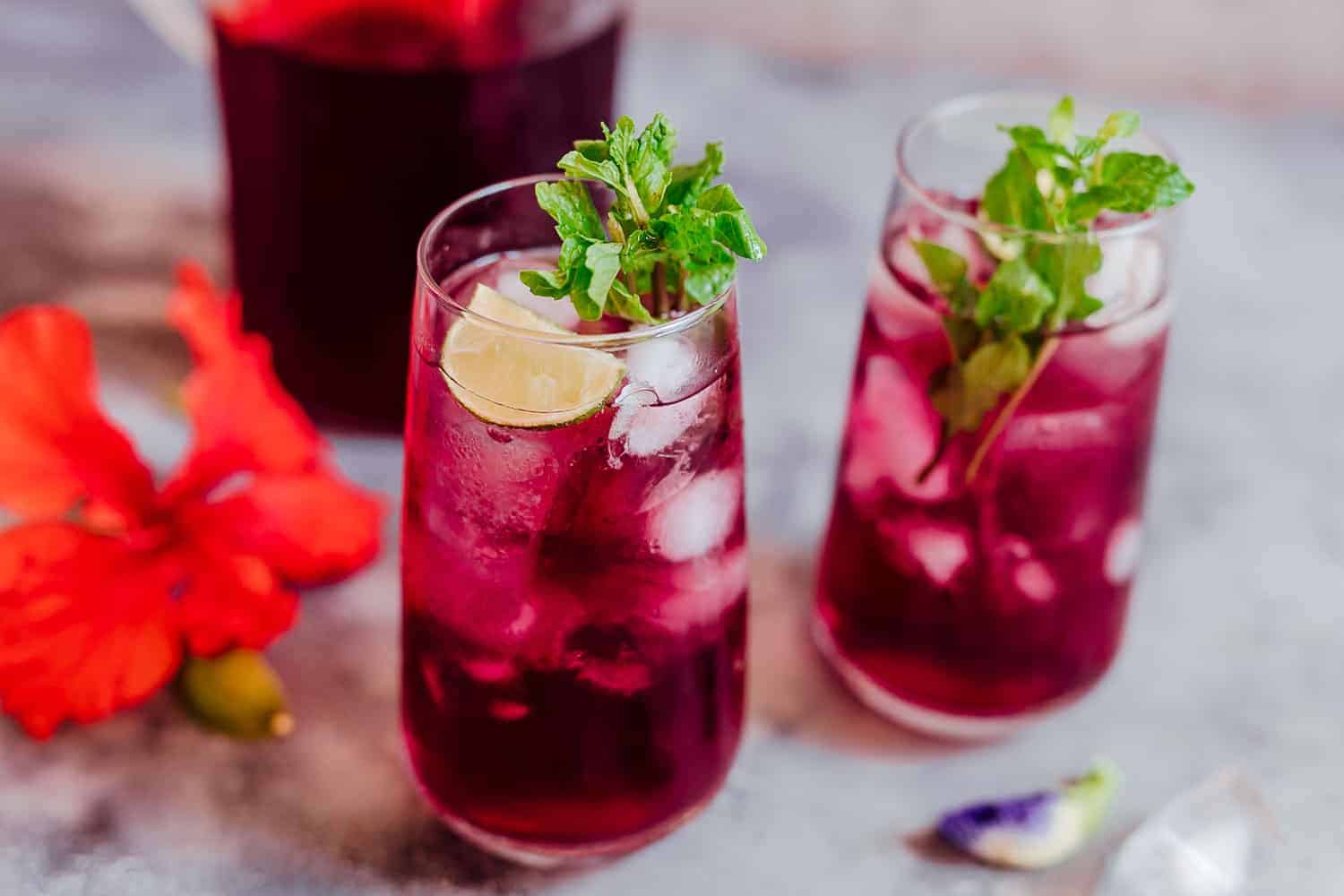
on Feb 21, 2018, Updated May 24, 2023 We have a pretty big hibiscus tree in our new garden and everyday we get a few hibiscus flowers. Combined with the hibiscus in our neighbor’s garden there is a LOT of hibiscus. Not complaining because it makes the most delicious hibiscus tea. I ended up posting how to make hibiscus tea on Instagram stories yesterday and the response was incredible. So many people suggested other ways to use hibiscus which is edible and has a variety of health benefits. So obviously, I had to write down everything I’ve found out about this superfood and share it with you. My favorite part of brewing a pot of hibiscus tea at home is the color of course. It has a gorgeous deep pink hue that’s hard to beat. And so perfect right now because afternoons here are getting warmer and a chilled glass of this is super welcome. We have an amma who comes to help us and she’s the one who got started us on this. She saw us collecting a bowl of the flowers and was so excited to show us what we could do with it. So far we’ve made a fabulous hibiscus hair mask which works as a conditioner and this tea. She prefers it hot with honey and a squirt of lime juice but I’m all about the hibiscus iced tea. I mean who can resist when it looks like this?
What is Hibiscus?
Hibiscus is a flowering plant found in parts of the world with warm and tropical climates. These plants are known for their colourful and large flowers. In fact, there are so many species of Hibiscus, the flowers come in all shapes, sizes and colours. It grows beautifully in India because of our climate. While most commonly used as a decorative element, these flowers also offer culinary and medicinal uses. There are far too many species of the Hibiscus plant, the most popular variety however is Hibiscus sabdariffa which is what we use. These come in plenty of colours such as white, yellow, pink, orange, red etc. The pink and red coloured flowers are most commonly used for culinary purposes.
What parts of the hibiscus are edible?
We recommend you only eat the petals. The stamen (includes anther and filament), calyx (the green base attached to the stem), the pistil (includes the stigma, style and ovary) and the pollen are discarded and not used for cooking. Some authors do suggest the pistil can be used as it is edible.
Benefits of including Hibiscus Tea in your Diet
The hibiscus plant is known to have a number of medicinal properties making it a safe and healthy addition to your everyday routine. Like all herbal teas, this quick and easy to make Hibiscus tea also offers a wide range of benefits:
Lowers blood pressure – reduces risk of heart diseaseSuper rich in antioxidants – helps protect your cells and prevents damage from free radicals Immunity booster – stimulates T cells and B cells Lowers cholesterol – hibiscus tea helps reduce blood fat levelsHelps with period pains – also decreases hormonal imbalanceRemoves toxins from body – improves liver functions
But it can also have some side effects.
Side Effects of Hibiscus Tea
Hibiscus Tea can affect oestrogen levels which means that it has an effect of both pregnancy and fertility. If you are trying to become pregnant or are pregnant, you should probably avoid hibiscus in your diet. It also lowers blood pressure which can be harmful if you already suffer from low blood pressure. With anything that has medicinal properties, its really important to see if it works for you. Something that I’m slowly learning while we live here in Auroville. We eat a lot of healthy, local ingredients now and people around us are happy to tell us more about them. Don’t be afraid to try this out because it’s incredibly easy to make and you can make it with both fresh or dried flowers. If you don’t have access to fresh one, dried hibiscus flowers are easily available online.
Love Tea? Try Out These Recipes:
5 Amazing Chai RecipesMasala Chai Panna CottaVirgin Apple Iced Tea (Mocktail)