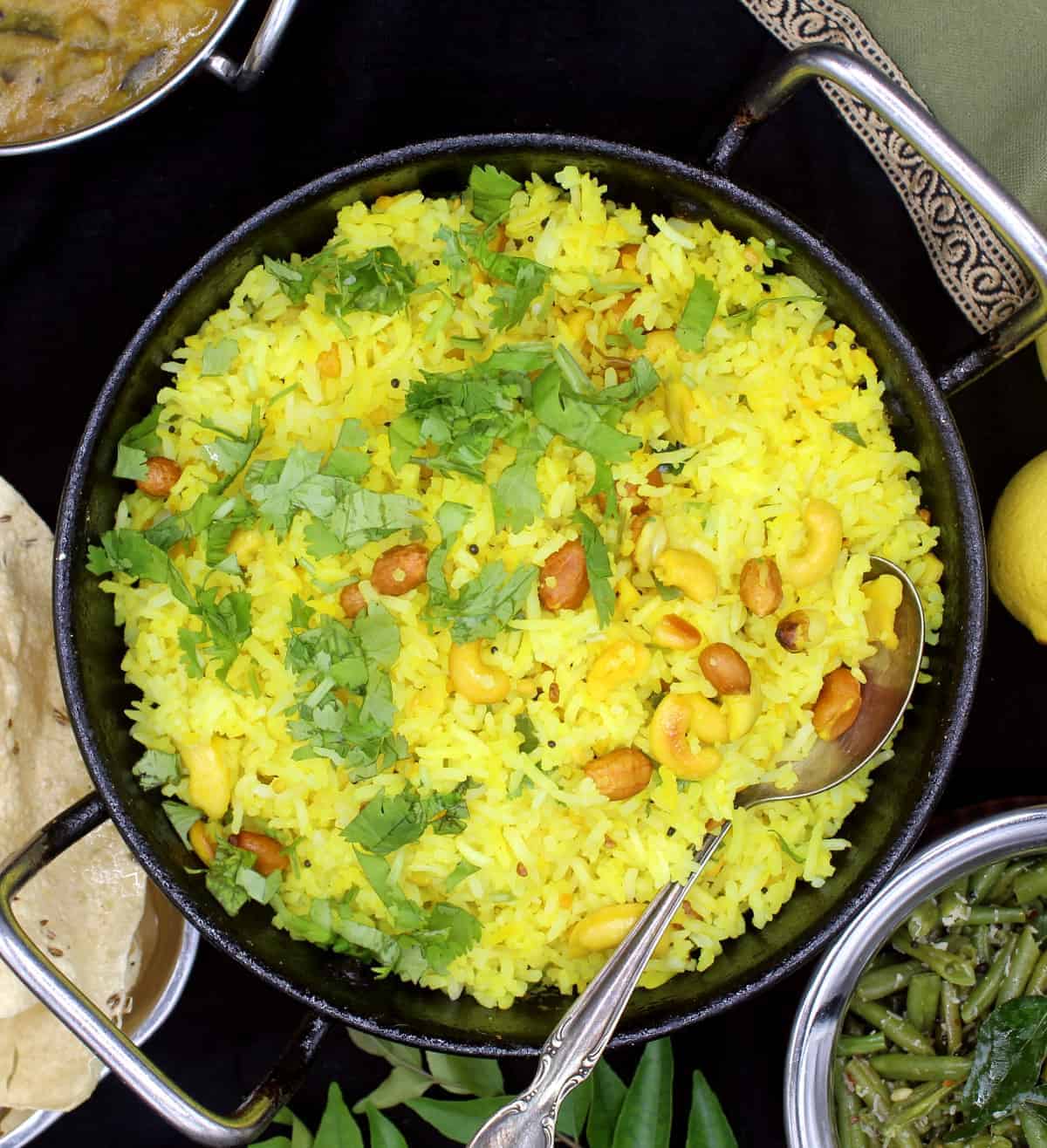
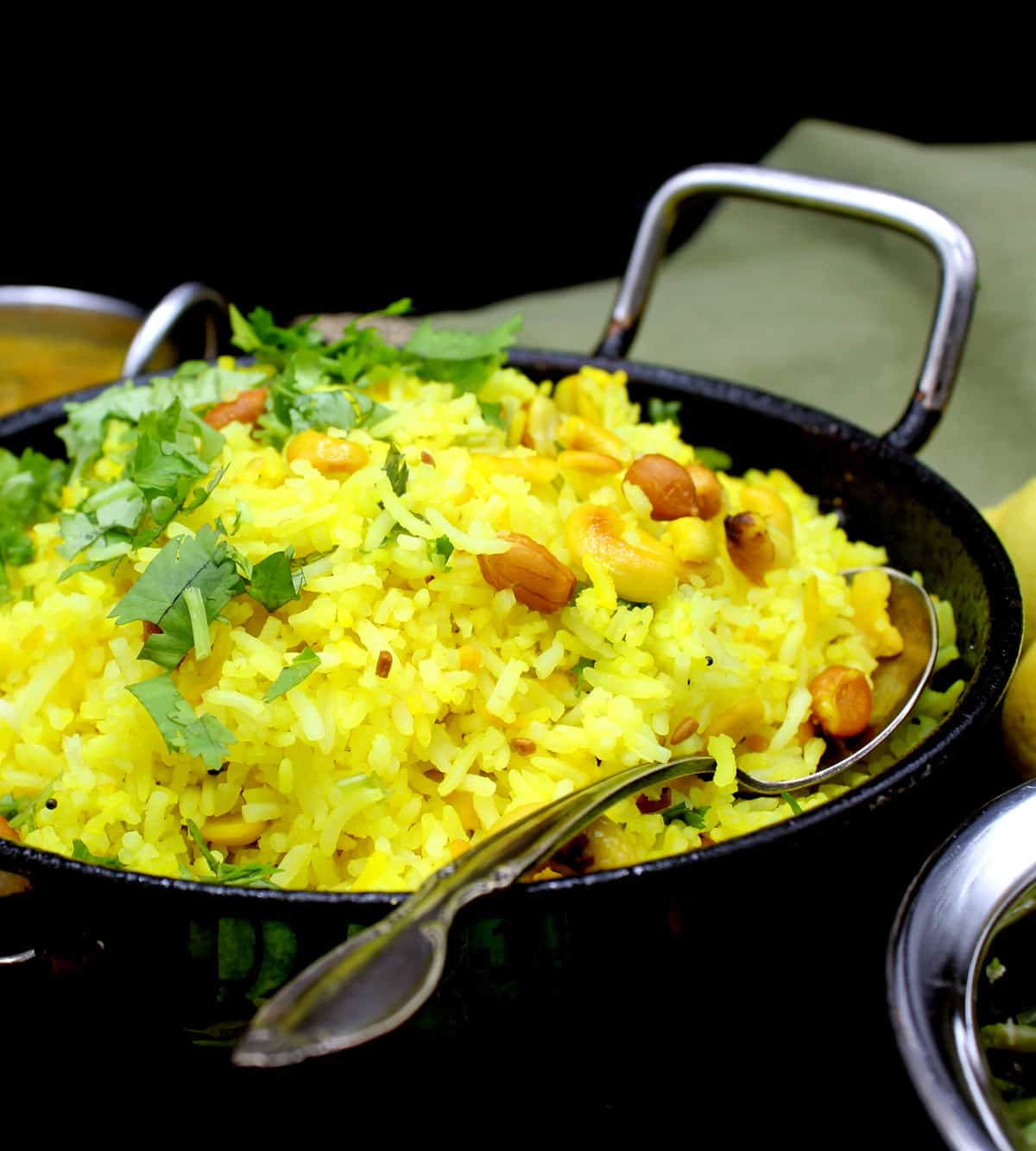
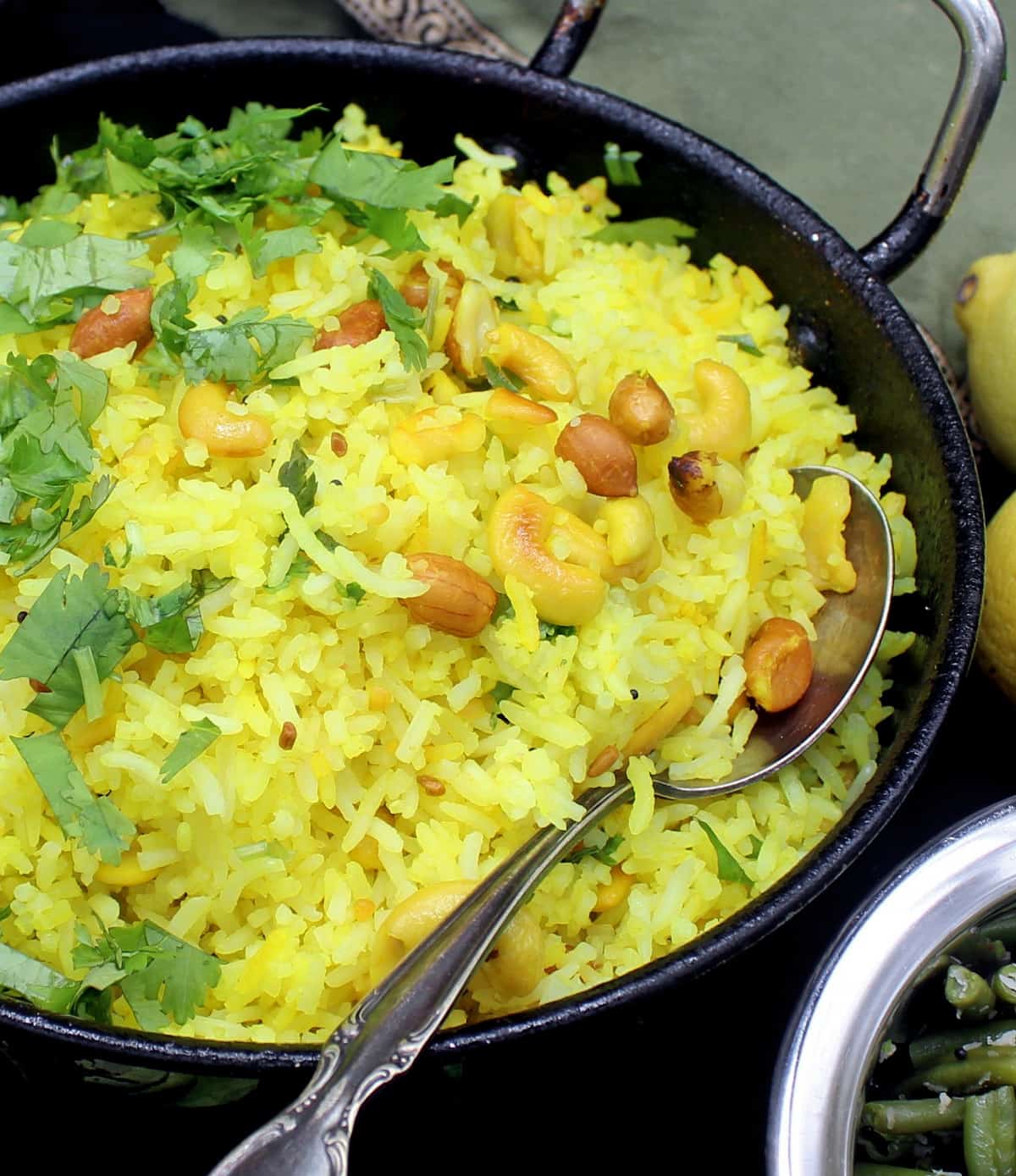
I’m going to show you how to make the best lemon rice you’ll ever eat, and I’m going to show you how to do it in about 20 minutes. Lemon rice is a south Indian staple, and a food I became familiar–and fell in love–with when I married a Tamilian. This was one of the rice dishes (along with tomato rice, coconut rice and turmeric rice) that my mom-in-law always packed for long road trips (usually to temples) every time we visited family in Madras or Chennai, as it’s now called, because it’s easily made, easily packed, and easily eaten with no need for fussing around with curries and dals. But elumichai saadam, as lemon rice is known in Tamil, is not just travel-friendly food. It is extraordinarily delicious. And versatile. You can serve it with any saucy dish. I often make it to accompany north Indian dishes like chana masala or palak paneer, and it never fails to make any meal that much more special. But more on that later.
Why you’ll love this lemon rice recipe
It’s SO lemony and yummy. It’s incredibly aromatic with the basmati rice and spices. It’s foolproof. Even a beginner cook can’t go wrong. It comes together in about 20 minutes. It’s super versatile, and works well either by itself or as a side. It makes a great brown bag lunch.
Ingredients
Basmati rice: Basmati, with its long grains and heady aroma, is the best rice here. Wash it thoroughly before using to get as much of the starch off as possible so the grains are long and separate after you cook. Vegetable oil: I use avocado oil for most of my Indian cooking, but peanut oil is a fine substitute or you can use coconut oil, which works very well in this recipe. Don’t use olive oil because its flavor won’t work here. Spices: Black mustard seeds (for the tadka or tempering), dry red chili peppers (use the dried peppers from Indian stores or a spicy pepper like the arbol chile pepper or substitute with red pepper flakes), fenugreek seeds (optional, but they add a nice flavor), and turmeric (for lovely color and healthfulness). Urad dal (split black gram dal): Lentils play the role of adding flavor and an extra crunch to south Indian rice recipes. They are also good for you and with the rice form a complete protein. Herbs: Curry leaves and cilantro. If you can’t find curry leaves, just double the cilantro and add half of it during the tadka or tempering. Nuts: Raw cashew pieces and peanuts. You can just use one or the other. Fresh lemons for lemon juice and lemon zest. Lemon juice is the star of this recipe. You can add a lot or a little, let your tastebuds direct you on how tangy you want this rice to be. I use half a cup. The zest is not a traditional ingredient but I use it for more amazing lemony flavor. If using the lemon zest always be sure to use an organic lemon.
Variations
Add 1 cup frozen green peas of finely chopped green bell peppers to the pot along with the rice for more crunch and texture. Use brown basmati works instead of white rice. It works just as well, but will need a longer cooking time (see recipe card). Use dill or parsley for garnish instead of cilantro for a fresh, unique flavor. Use other nuts instead of cashews and/or peanuts in this recipe. Chopped walnuts and almonds or pistachios would work beautifully.
Expert tips and how to make lemon rice
Try and use a fragrant rice, like basmati, although any rice will do. Basmati rice not only tastes great, but if properly cooked, its grains do not clump together, making it easier for the spices and lemon to disperse evenly and also making for a better presentation. Cook your rice first and separately until it’s just done. I do this in the microwave, but you can do it any way you like, in the Instant Pot, in a pressure cooker, or on a stove. Your rice should be fully cooked, unlike when we do a biryani where the rice is left partly uncooked. That’s because you won’t do any more cooking once you mix the rice with the tempered spices. For the tempering, you’ll need mustard seeds, curry leaves, dry red chili peppers, turmeric, urad dal (black gram dal–always use the split dal for seasoning, not whole), fenugreek seeds (you can leave these out, but they add a really nice sweet-bitterness that enhances the taste of this rice), and nuts like peanuts and raw cashews. You can just go with one kind of nut or the other. If you want to make this nut-free, just leave the nuts out. I chop curry leaves when I add them to rice dishes, because although curry leaves are edible, some people are put off by the large leaves and don’t know what to do with them. Chopping the leaves also makes them crisp up nicely. I like using lots of lemon juice in my lemon rice–about a third to a half cup of lemon juice for 2 cups of uncooked rice. Obviously this is a matter of taste, so you can start out with less and add more depending on how lemony you want your rice to be. Speaking of lemony, while my lemon rice is quite traditional, I have made one modern tweak that I really like–I add to it some lemon zest. The aromatic oils in the zest make it even more fragrant, and I strongly recommend it. Don’t overdo it–the zest of one small or medium lemon is more than enough. Also try and use an organic lemon if you plan on using the zest. Once you’ve got your rice cooked, your spices and nuts tempered, and your juice squeezed, all you need to do is mix it all together and season it. Garnish it, if you want, with some cilantro and you’re all set. One note I’d like to add here is to not add any warm Indian spices–garam masala spices–to your lemon rice. The flavors of cardamom, cloves and cinnamon, as wonderful as they are in so many Indian recipes, will overwhelm the delicate flavor of your lemon rice and they are not welcome here.
Serving suggestions
The best thing about this lemon rice pilaf is you can serve it just by itself, with maybe some carrot pickle and a poppadum on the side. That’s also what makes it so travel-friendly. You can also serve it with a south Indian onion sambar or pumpkin sambar. This is one of my favorite side dishes to serve with north Indian curried dishes like Chana Masala or Tofu Palak Paneer or this spicy Urad Dal. Or serve it with simply a salad, like this Indian inspired carrot salad or turmeric potato salad.
Storage instructions
Refrigerate: Store the lemon rice in an airtight container in the refrigerator for up to four days. Freeze: Freeze leftovers in a freezer-safe container or in a freezer bag for up to three months. Reheat: Reheat in the microwave or in a saucepan before serving.
More delicious rice recipes
Perfectly Cooked Basmati Rice Lemon Garlic Rice Veg Fried Rice Vegan “Chicken” Biryani Chickpea Rice Carrot Rice
Recipe card
Check to get new recipe updates by email.