on Feb 26, 2024 I didn’t grow up eating millets. But in the last few years, I have seen my parents incorporating them into their diet. They are also a popular staple in Karnataka where I now live. So here is me trying to learn more about them and hoping to break them down for you so that you aren’t as confused as I was.
What are millets?
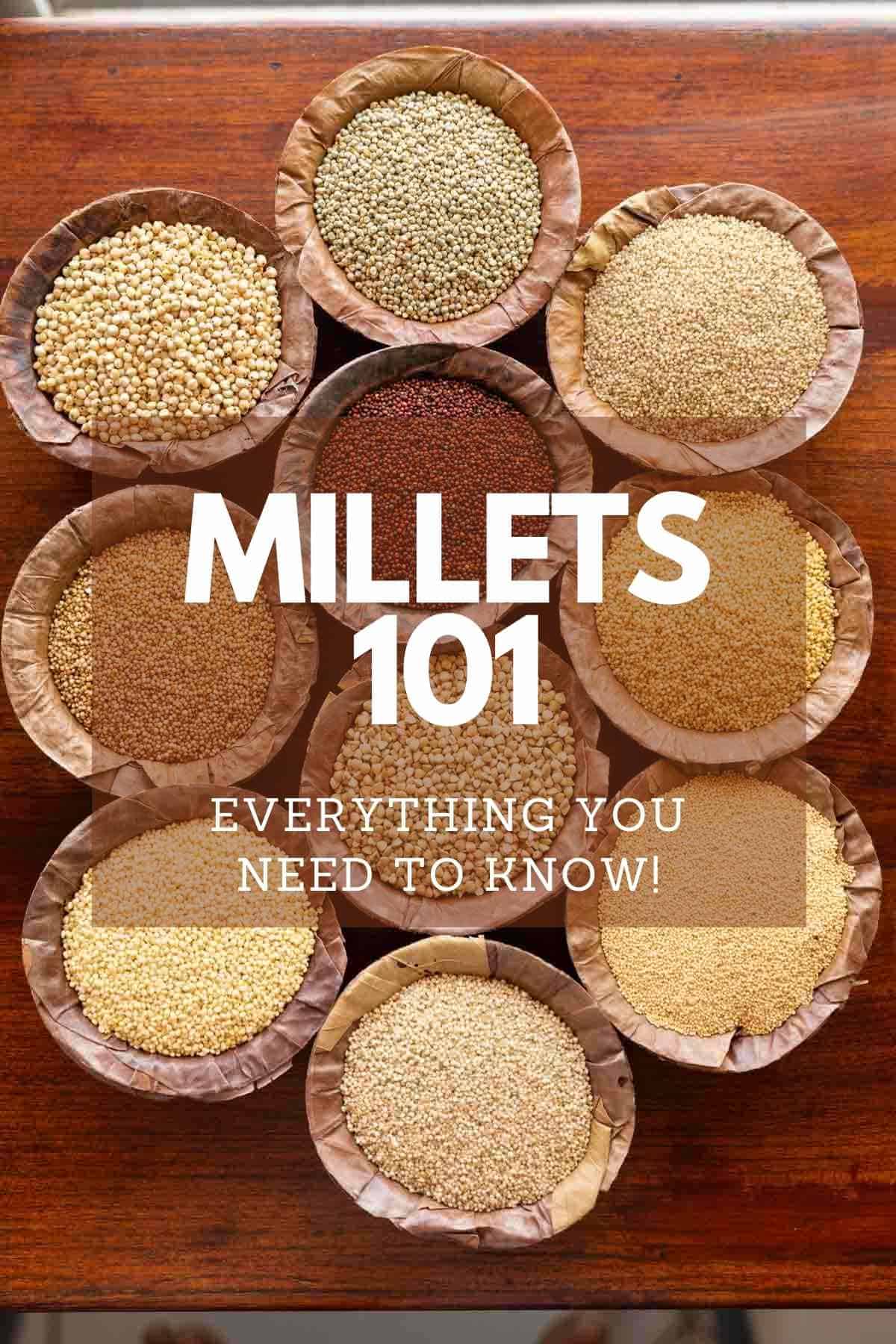
Millets are small-seeded grass belonging to the Poaceae botanical family. Based on their size, millets are categorised into two main categories – major millet and minor millet. There is also pseudo millet, which don’t belong to the Poaceae family, but are also similar in their nutrient profile and usage to true grains. Chances are you might already be eating common millets like ragi, bajra, jowar and amaranth, but there are so many more – each with its own unique nutritional benefits and flavor profile. Plus millets are really versatile! They work well in both sweet and savory dishes and can be eaten in so many different ways.
How to start eating millets?
Replace regular noodles with millet noodles. Regular noodles are made with maida which has almost no nutritional value. But millet noodles on the other hand are rich in fiber, calcium, and protein, making them so much more wholesome. My kids and I love these millet noodles from Slurrp farm! Use millet flours for rotis. Start with adding about 30% of millet flour (either jowar, bajra, ragi) to your regular wheat flour and make rotis out of it. You can increase the amount of millet flour gradually once you get used to the flavor. Make dosas, idlis and crepes. Millets taste really good in dosas and ferment beautifully. My instant ragi dosa, ragi crepes, chocolate ragi pancakes, chocolate ragi cake, and millet mysore masala dosa recipes can be an easy start. Make porridges or khichdi by replacing rice, oats and other grains with millets. Check out my easy and delicious bisi bele bhaat recipe that is made entirely with foxtail millet for a healthy and nutritious breakfast. Use millets to make interesting dishes like dhoklas (either with flour or fermented millet batter), risottos (buckwheat works beautifully), pulaos and even salads (jowar and buckwheat will be amazing) Millets can sometimes cause dehydration. To prevent that, increase your water intake after introducing millet into your diet. Millets are not only rich sources of fiber and nutrients, but also heavier and take longer to digest. Hence always consume it in portions smaller than your regular portion of rice.
How to cook Millets
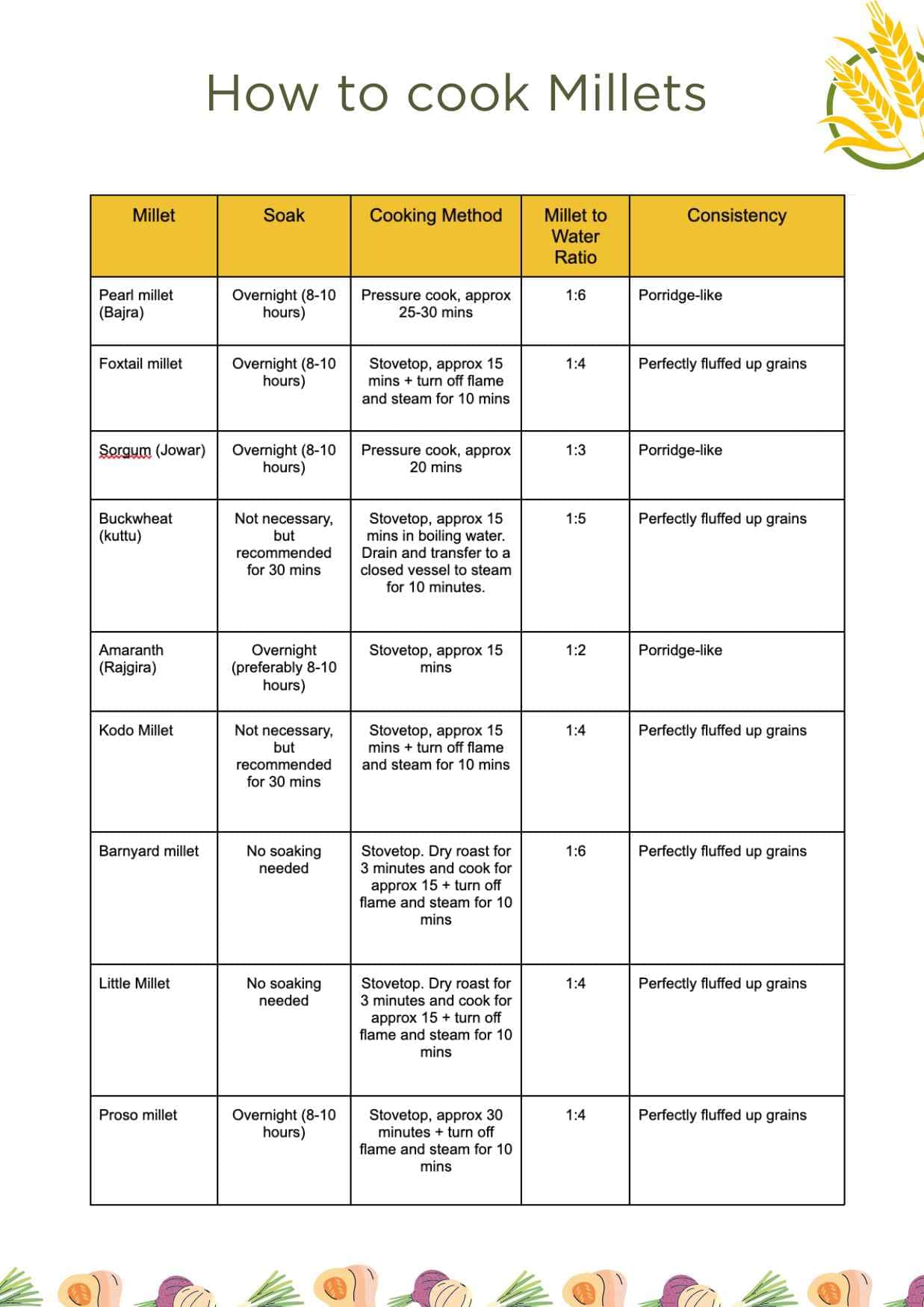
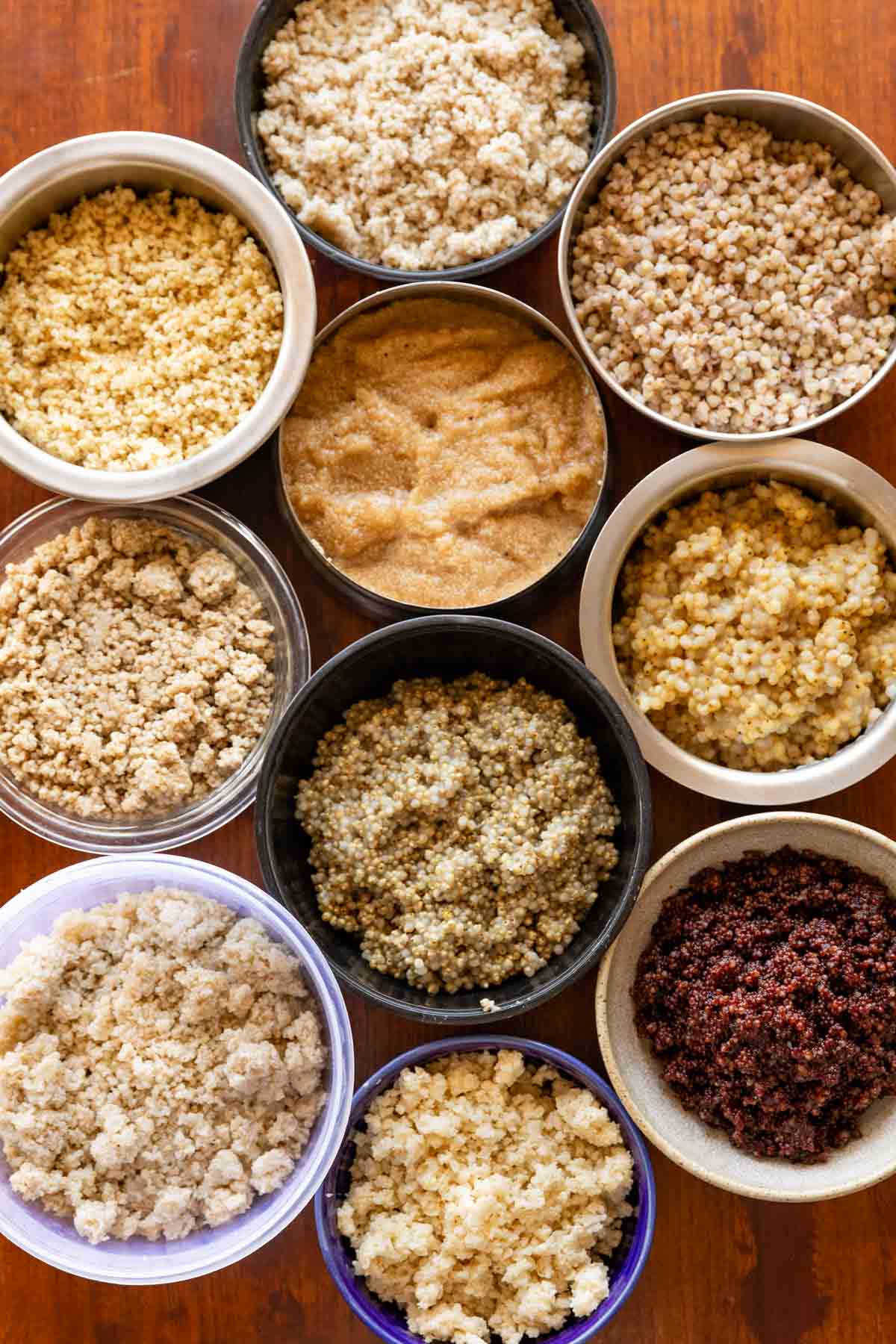
Millets can be really intimidating to cook, so we decided to do all the hard work for you. Here’s a quick breakdown of how to cook each variety of millet along with soaking times, cooking times and resting times. Please note: We don’t recommend cooking ragi and using it in the grain form, because it takes very long to cook and isn’t appetising to eat. Ragi is best used as a flour, or soaked and ground. P.S. Actual picture of all the millets we cooked to learn how to cook them properly 👇🏻
How to use Millets
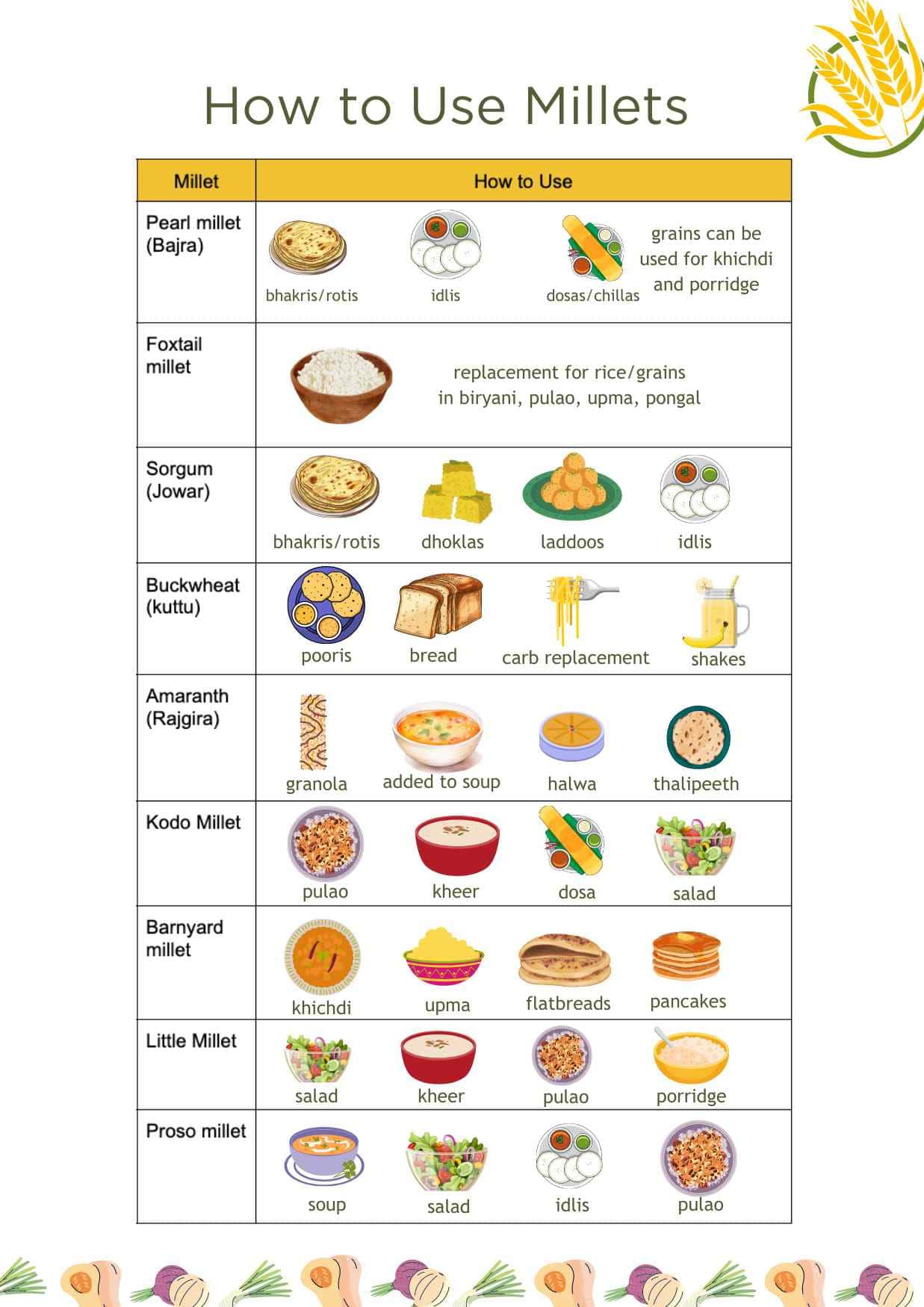
Millets can be really versatile. Since I started using them, I’ve discovered that they are great for dosas, idlis, dhoklas, rotis, crepes, salads, soups, risottos, parathas, pulaos, khichdis, desserts and so much more. And I bet you can discover even more uses for them. Here are some ideas for you to get started.
Top Tips to cook Millets
Make sure to rinse the millets thoroughly until the water runs clear to get rid of dirt and other impurities. Soaking millets is really important. This not only ensures that they cook faster, become easier to digest and can easily help our bodies absorb the nutrients more effectively. Always drain the soaking water before cooking them. Use a pot with a well-fitted lid to cook the millets. This helps to create enough steam in the pot and thereby makes sure that the millets are cooked perfectly. When cooking the millet, lower the flame after the first boil and allow it to cook on slow heat for the mentioned time. If your millet is chewy or hard, then that means it could be undercooked, and it is best not eaten. Undercooked millet can cause digestion issues as well as dehydration, so make sure to cook them till they are soft.
Benefits of Millets
Note: Some millets tend to enlarge the thyroid gland, so please consult your doctor before making millets a part of your diet if you have hypothyroidism. If you have never tried millets, consider this your cue to start experimenting with them. If you have never had millets before, it may take you some time to acquire the taste, but it’s totally worth persevering. I have a ton of delicious millet recipes like chocolate ragi pancakes, millet mysore masala dosa , and bisi bele bhaat to help you get started on your millet journey.